
Industrial and commercial flooring systems are designed to withstand heavy machinery, constant foot traffic, forklifts, chemicals, and years of wear. But despite all these engineered strengths, one silent force causes more industrial flooring failures than anything else:
Moisture.
Moisture problems are one of the most common and most misunderstood causes of delamination, bubbling, coating failure, and long-term concrete deterioration. Whether you manage a warehouse, workshop, manufacturing facility, retail space, or logistics centre, excess moisture beneath or within the concrete slab can lead to disruptions, expensive repairs, and even safety risks.
This guide breaks down:
- What causes moisture issues in industrial concrete floors
- Early warning signs most facility managers miss
- Why moisture destroys epoxy, polyurethane, and other coatings
- How proper testing prevents long-term failures
- Solutions that Home Concrete Solutions uses to protect commercial floors
With the right moisture management strategy, industrial floors can last decades not just a few years.
Why Moisture Is a Major Threat to Industrial Flooring
Concrete is often mistaken as a fully solid, waterproof material. In reality, concrete is porous and continuously absorbs, releases, and transmits moisture. Under the wrong conditions, this trapped or rising moisture will push upward and compromise coatings like:
- Industrial epoxy flooring
- Polyurethane coatings
- Decorative finishes
- Sealants
When moisture levels exceed acceptable limits, flooring failures begin.
Common Causes of Moisture Problems in Industrial Floors
1. Moisture Rising From the Ground (Hydrostatic Pressure)
If the concrete slab lacks a proper moisture barrier underneath, groundwater can slowly rise upward, pushing through the slab and into the coating system.
2. Poor Drainage Around the Facility
Blocked stormwater, poor sloping, or nearby garden beds can funnel water toward the slab, increasing moisture vapour emissions indoors.
3. High Humidity Inside the Building
Factories, food processing plants, and warehouses often generate steam or moisture that settles into concrete over time.
4. Leaks or Plumbing Problems
Water from roof leaks, broken pipes, or machine cooling systems can saturate the slab without immediate visibility.
5. Newly Poured Concrete Slabs
New concrete can take **up to 12 months** to fully cure and release trapped moisture.
How Moisture Damages Industrial Floor Coatings
Excess moisture underneath a coating leads to predictable patterns of failure:
- Delamination – coating lifting or peeling away from the surface
- Bubbling or blistering – moisture pressure creates bubbles under the coating
- Efflorescence – white salt residue forming on the surface
- Cracking – moisture movement expands or weakens the slab
- Staining & discolouration – chemical reactions with trapped moisture
Once these failures begin, repairs become significantly more complex and expensive.
This is why moisture testing and proper floor preparation are essential steps in our commercial flooring projects.
Early Warning Signs Your Industrial Floor Has a Moisture Problem
Most facility managers notice structural problems long before they understand moisture is the root cause. Look for these early indicators:
- Dark patches on concrete that reappear after drying
- Bubbling or peeling epoxy in forklift pathways
- Musty smell in certain areas of the warehouse
- Coating failures near exterior walls or roller doors
- Condensation on floor surface during mornings
- Efflorescence (white powdery residue)
If you see any of these signs, arrange a moisture evaluation before completing any repairs or coating work.
Moisture Testing: The Step That Should Never Be Skipped
Professional moisture testing helps determine whether a slab is suitable for coatings. At Home Concrete Solutions, we use industry-standard methods before any commercial flooring installation:
- Concrete Moisture Meter Testing – Measures surface moisture levels.
- RH In-Slab Testing (ASTM F2170) – Determines moisture deep inside the slab essential for epoxy and polyurethane coatings.
- Calcium Chloride Testing – Measures moisture vapour emission rate (MVER) to ensure coating compatibility.
Skipping this step leads to almost guaranteed coating failure later. Many “cheap” contractors avoid testing which is why industrial failures often appear within months.
How Home Concrete Solutions Prevents Moisture-Related Flooring Failures
We take a prevention-first approach for all industrial projects. Here’s how we protect your flooring investment:
1. Thorough Concrete Grinding & Preparation
A properly profiled surface ensures coatings mechanically bond to the concrete.
Explore our process here: Concrete Grinding & Preparation
2. Application of Moisture Barriers
If testing reveals elevated moisture, we install specialised moisture barrier systems designed for industrial environments. These reduce vapour transmission and prevent pressure buildup beneath coatings.
3. Industrial-Grade Epoxy & Polyurethane Systems
Commercial floors need coatings that withstand heavy loads, harsh chemicals, and constant use.
Learn more: Industrial Epoxy Flooring
4. Correct Coating Thickness for the Environment
High-wear areas require thicker builds or additional layers to handle traffic, heat, and pressure without failing.
5. Drainage and Site Assessment
Poor external drainage can feed moisture back into the slab. We assess your premises and recommend long-term solutions where needed.
Case Study: Moisture Failure Turned Industrial Success
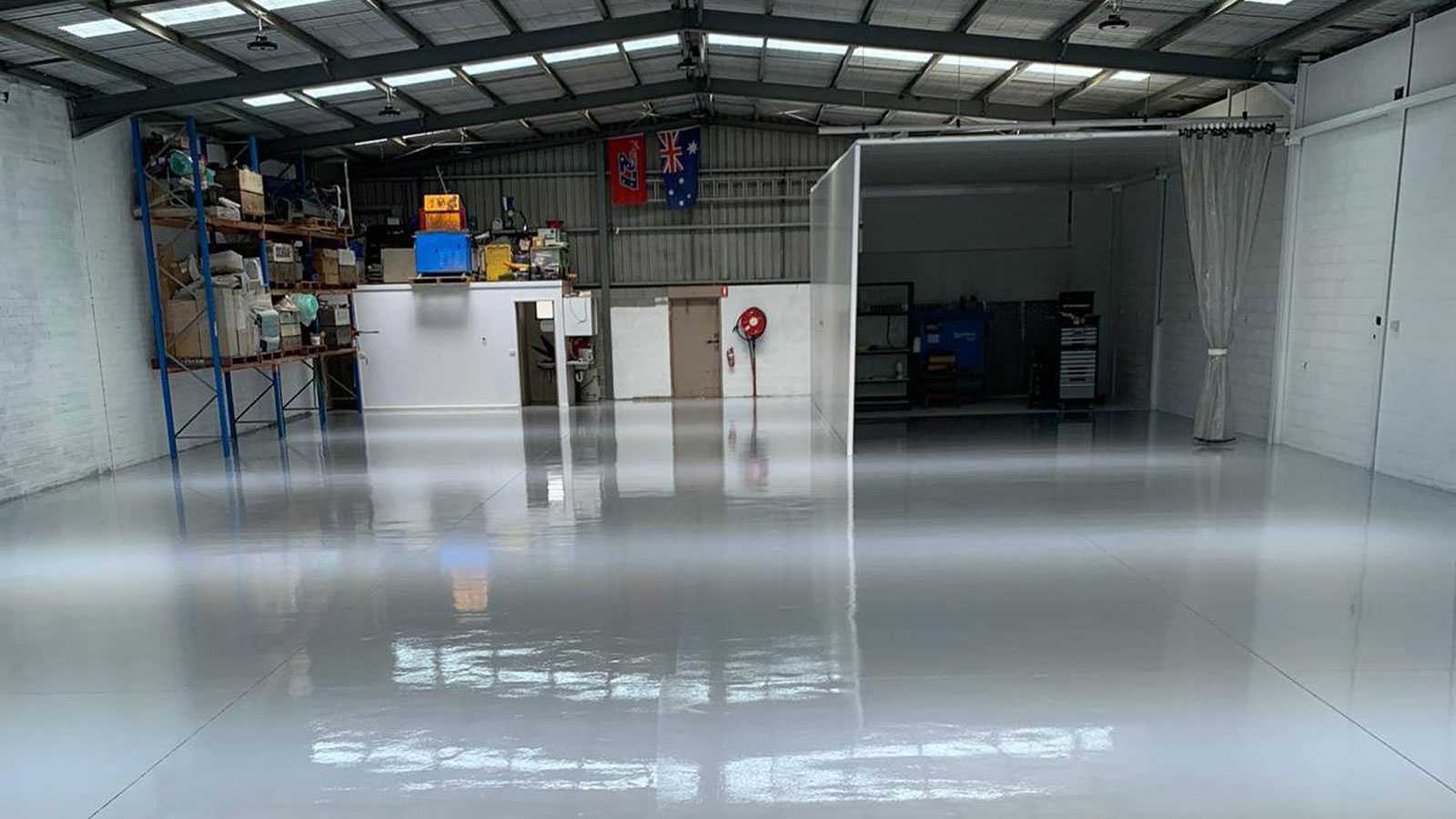
This industrial site experienced recurring epoxy delamination every 12–18 months. After moisture testing revealed high RH levels, our team:
- Performed full mechanical floor preparation
- Installed a heavy-duty moisture barrier epoxy primer
- Applied a high-build industrial epoxy system
- Created a slip-resistant finish for forklift pathways
The result: a durable, long-lasting floor designed to withstand moisture, heavy machinery, and 24/7 operations.
When Moisture Problems Require More Than Coatings
In severe cases, floor maintenance may require structural repair rather than surface treatment. You may need intervention if:
- The concrete slab is lifting or heaving
- There is continuous water ingress from soil or walls
- Drainage failures cause standing water around the building
- The slab was installed without a vapour barrier
We also support industrial sites with: Concrete Floor Repairs & Restoration
Is Moisture a Risk for Your Facility? Here’s How to Tell
You should schedule moisture testing if your facility has:
- Plans for epoxy flooring or resurfacing
- Existing coating failures
- A history of leaks or drainage problems
- A newly installed concrete slab
- Temperature or humidity fluctuations
Identifying moisture early saves thousands in repairs and prevents operational downtime.
Final Thoughts: Moisture Management Protects Your Industrial Investment
Moisture is the hidden enemy of industrial flooring but it is also predictable and manageable with the right testing, preparation, and protective systems.
By understanding the risks and taking proactive steps, facility managers can avoid:
- Coating failure and safety hazards
- Unnecessary repair costs
- Business interruptions
- Premature floor replacement
A moisture-controlled industrial floor is safer, stronger, and significantly more cost-effective long-term.