For many homeowners, the driveway is the first part of the property that starts showing visible signs of ageing cracks, stains, uneven patches, fading colour, and general wear over time. But the big question remains: Is driveway resurfacing actually worth it? Or should you save up and replace the entire slab?
In Victoria, resurfacing has become one of the most popular restoration methods because it is significantly more affordable than replacement and delivers a modern, long-lasting finish. But resurfacing is not suitable for every driveway. This guide will help you clearly understand:
- When resurfacing is worth the investment
- When replacement is the better option
- The realistic costs in 2025
- The expected lifespan of resurfaced concrete
- Pros and cons homeowners should consider
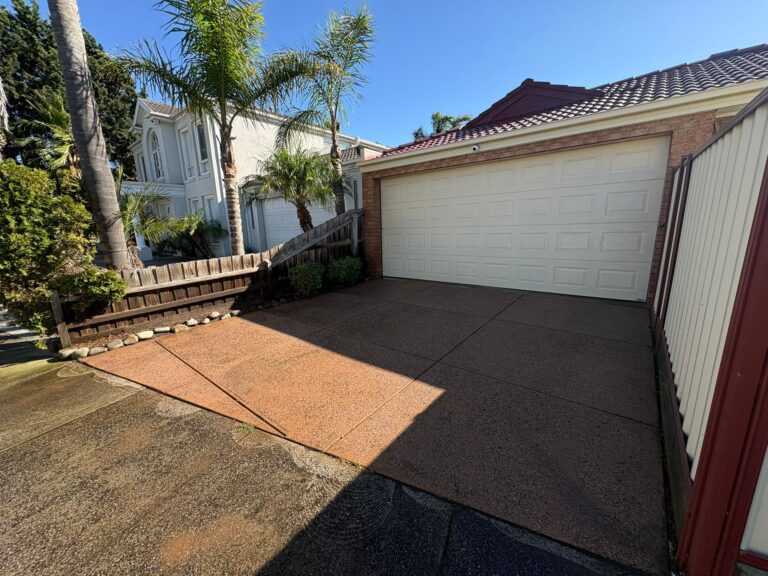
- Examples of what a resurfaced driveway looks like
By the end, you’ll have enough information to make the right decision for your home with clarity, not guesswork.
What Is Driveway Resurfacing?
Driveway resurfacing involves applying a new decorative concrete coating over your existing slab. Unlike a full replacement, there is no demolition involved. Instead, the existing concrete is repaired, cleaned, and covered with a strong cement-based coating such as spray-on concrete, repair mortar, or epoxy flake finishes.
This process restores the look, texture, and durability of the driveway without the cost and disruption of installing new concrete.
Is Driveway Resurfacing Worth It? (Short Answer)
Yes, resurfacing is worth it when the concrete is structurally sound but cosmetically damaged. If your driveway has:
- Surface cracks
- Fading colour
- Minor potholes
- Stains or tyre marks
- Rough or uneven texture
Resurfacing restores the driveway for a fraction of the cost of replacement. However:
Resurfacing is NOT worth it when the concrete has deep structural damage, major movement, or sinking areas.
We’ll cover both in more detail below.
How Much Does Driveway Resurfacing Cost?
Current resurfacing prices in Victoria (2025 updated figures) typically range between:
- $70 – $120 per m² for standard resurfacing
- $120 – $160 per m² for decorative or premium designs
Costs vary based on:
- Size of the driveway
- Condition of the existing concrete
- Design choice (plain, coloured, stencil, fleck finish)
- Amount of surface preparation required
For a deeper breakdown, see our cost guide: How Much Does Driveway Resurfacing Cost in Victoria?
How Long Does a Resurfaced Driveway Last?
With proper application and sealing, resurfaced driveways in Victoria typically last:
10–15 years on average
Up to 20 years with excellent maintenance and low vehicle load
Factors that extend lifespan include:
- Sealing every 2–3 years
- Proper drainage around the driveway
- Adequate concrete strength beneath the coating
- Using UV-stable and weather-resistant coatings
Resurfacing is designed for long-term performance not just cosmetic improvement.
Pros of Driveway Resurfacing
1. Cost-Effective Alternative to Replacement
Resurfacing can be 60–75% cheaper than laying new concrete. Instead of paying for demolition, removal, formwork, and labour, you simply repair and upgrade the surface.
2. Modern Aesthetic Makeover
Choose from:
- Textured finishes
- Fleck coats
- Plain colours
- Patterns and stencils
- Slip-resistant coatings
This allows you to match your driveway to your landscaping, façade, and garage doors for a modern, clean look.
3. Faster Completion Time
Most driveway resurfacing projects finish within 2–3 days, compared to 7–14 days for a full concrete replacement.
4. Eco-Friendly Option
No demolition waste, no disposal trucks, and no new slab installation — resurfacing is more environmentally responsible.
5. Improved Safety and Traction
Slip-resistant textures can be added, making it safer for children, driveways on slopes, and homes with frequent foot traffic.
Cons of Driveway Resurfacing
1. Not Suitable for Structurally Damaged Concrete
If the slab is severely cracked, heaving, or sinking, resurfacing will not stop the movement underneath.
2. Requires Proper Surface Preparation
Skipping grinding, repairs, or cleaning can lead to peeling or delamination. This is why professional resurfacing is recommended.
3. Needs Resealing Over Time
Every 2–3 years, a reseal is required to maintain colour and protect the coating.
When Should You Resurface a Driveway?
Resurfacing is ideal when:
- The concrete has minor cracks or cosmetic damage
- You want a modern look without replacing the slab
- The base concrete is strong and stable
- You want a fast, affordable upgrade
Resurfacing is NOT recommended when:
- The driveway is sinking or lifting
- There are structural cracks wider than 5mm
- There is major sub-base failure or erosion
- The slab has significant drainage issues
For repairs beyond resurfacing, see: Concrete Driveway Repair Services
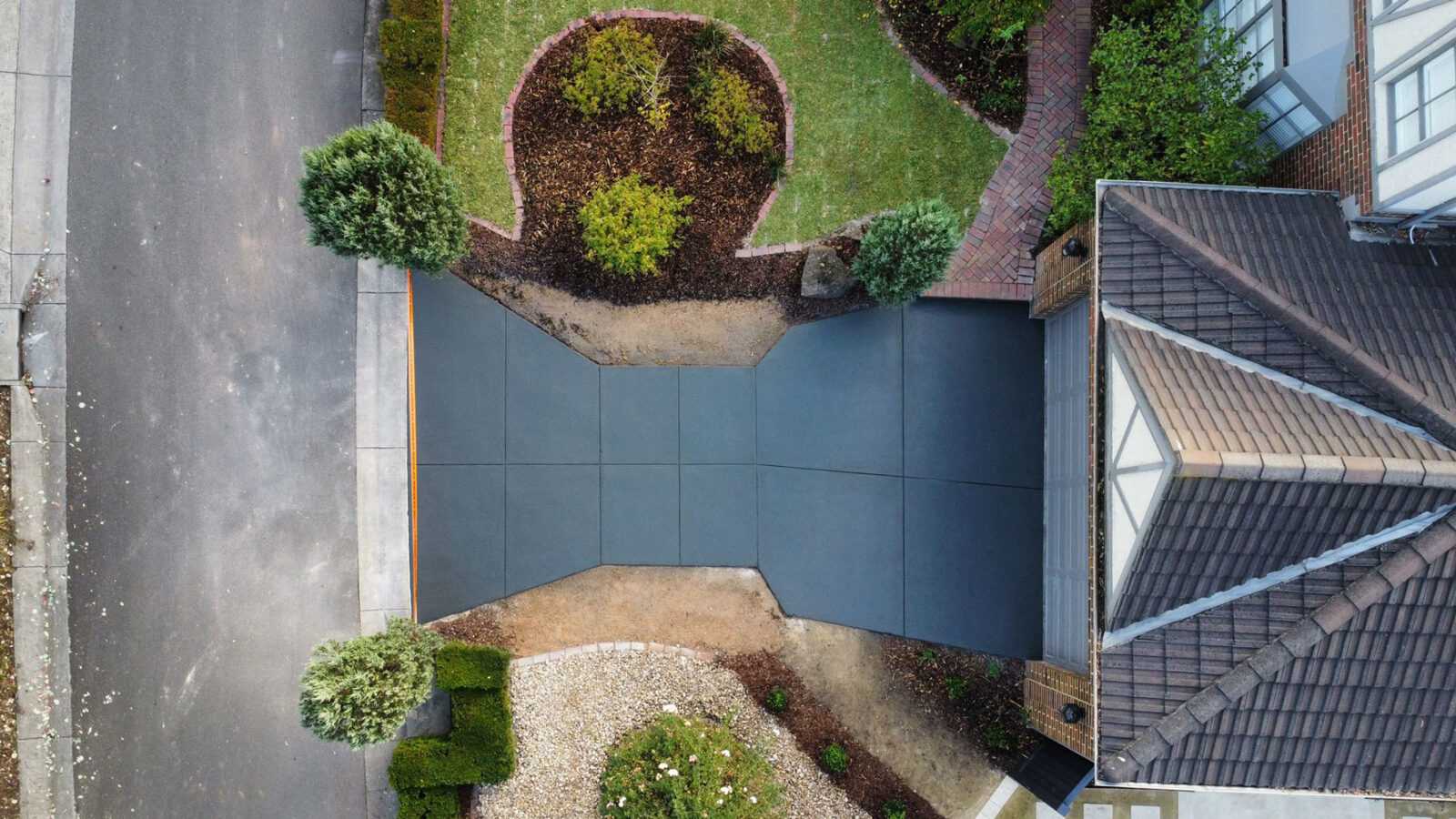
Case Study: A Real Driveway Transformation
Here is an example of a resurfacing project completed by our team:

Project Summary:
- Suburb: Melbourne
- Issue: Faded, patchy driveway with cracks
- Solution: Surface repairs + spray-on decorative coating
- Result: A modern charcoal finish that lifted the entire exterior appearance
This exact type of transformation is achievable for most homes with surface-level wear and ageing.
What Are the Alternatives to Resurfacing?
1. Repainting
Cheaper upfront, but needs redoing every 1–2 years. See our guide: Concrete Driveway Painting
2. Full Replacement
Recommended for severely damaged slabs. While more expensive, it provides a new structural base.
3. Epoxy Flake Coating
Used more commonly in garages but can be applied to driveways in certain conditions. Explore Epoxy Flake Flooring
So, Is Driveway Resurfacing Worth It?
Yes, if your concrete is structurally sound, resurfacing is one of the most cost-effective ways to dramatically improve the look, safety, and lifespan of your driveway.
You’ll avoid major demolition costs, enjoy a faster turnaround, and transform your home’s street appeal significantly.
However, if your concrete is severely damaged or unstable, replacement is the smarter long-term investment.