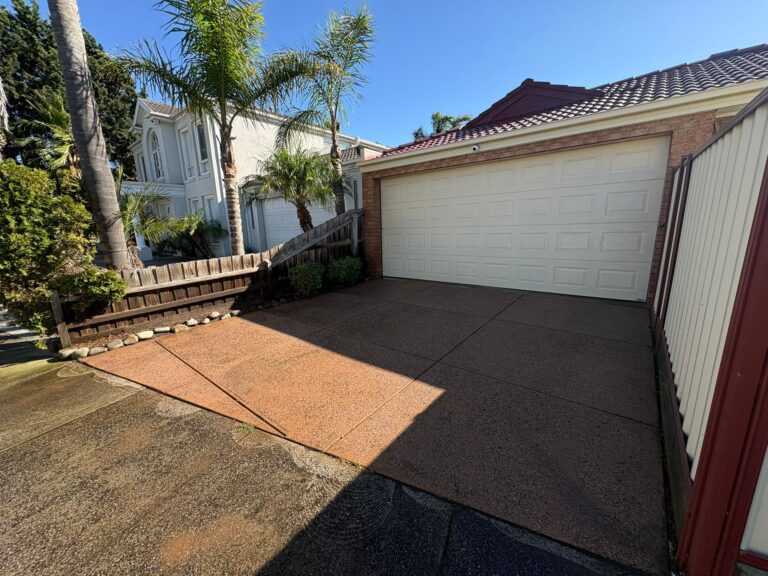

Your driveway is one of the most used and most exposed areas of your home. Over time, weather, vehicles, foot traffic, and natural ageing begin to take a toll on the concrete. Many homeowners notice cracks, fading, stains, or rough patches and wonder:
Does my driveway need resurfacing, or is it something more serious?
The good news is that not every worn or damaged driveway needs to be replaced. In many cases, driveway resurfacing is a highly effective and cost-efficient solution — but only when the underlying concrete is still structurally sound.
This guide will help you identify the clear signs that your driveway may be suitable for resurfacing, when repairs are required first, and when replacement is the smarter option.
What Is Driveway Resurfacing?
Driveway resurfacing involves applying a new decorative concrete coating over an existing concrete slab. Rather than demolishing and replacing the driveway, the surface is repaired, prepared, and upgraded with a durable finish such as:
- Spray-on concrete
- Decorative resurfacing systems
- Textured or coloured coatings
Learn more about the process here: Concrete Resurfacing Services
Key Signs Your Driveway Needs Resurfacing
1. Surface Cracks Are Present (But Not Structural)
Small cracks are one of the most common driveway issues. Hairline cracks or shallow surface cracks often occur due to temperature changes, minor ground movement, or natural concrete shrinkage.
Resurfacing is suitable if:
- Cracks are narrow and not widening
- No sections of concrete are lifting or sinking
- The driveway still feels solid underfoot
Resurfacing may not be suitable if:
- Cracks are wide or deep
- There is visible movement in the slab
- Cracks continue to grow over time
In these cases, repairs may be required first: Concrete Driveway Repairs
2. The Driveway Looks Worn, Faded, or Dated
Over time, concrete loses its original colour and finish due to UV exposure and weather conditions. Fading, discolouration, and patchy areas are strong indicators that resurfacing could restore both appearance and protection.
Common signs include:
- Uneven colouring
- Sun-bleached concrete
- Outdated or mismatched finishes
Resurfacing provides a modern, uniform finish without removing the existing slab.
3. Stains That Won’t Come Out
Oil stains, tyre marks, rust, and organic staining can penetrate untreated concrete. In hot weather especially, stains can become “baked” into the surface.
If cleaning no longer improves the appearance, resurfacing offers a clean slate by covering the damaged surface and sealing it against future staining.
Alternatively, for less severe cases, sealing or painting may be sufficient: Concrete Driveway Painting
4. The Surface Feels Rough, Dusty, or Uneven
As concrete ages, the top layer can begin to break down, a process often referred to as surface erosion or dusting. This is especially noticeable during dry or hot weather.
Why this matters:
- Surface breakdown weakens durability
- Uneven textures create trip hazards
- Rough concrete absorbs more moisture and stains
Resurfacing restores a smooth, even surface and protects the slab from further erosion.
5. The Driveway Becomes Slippery When Wet
Older driveways can become slippery due to sealant breakdown, surface polishing from traffic, or algae growth in shaded areas.
Resurfacing allows for:
- Slip-resistant textures
- Anti-slip additives
- Safer finishes for sloped driveways
This is particularly important for family homes and properties with inclines.
Signs Your Driveway May NOT Be Suitable for Resurfacing
While resurfacing solves many problems, it’s not the right solution in every situation.
Resurfacing is generally not recommended if:
- The driveway has major structural cracks
- Sections are sinking or lifting
- Water consistently pools due to base failure
- The concrete sub-base is unstable
In these cases, professional assessment is essential to determine whether repairs or replacement are required.
Why Resurfacing Is Often the Right First Step
For driveways that are structurally sound but cosmetically damaged, resurfacing offers several advantages:
- Significantly lower cost than replacement
- Faster turnaround time
- Improved appearance and safety
- Extended lifespan of the existing concrete
It also allows homeowners to modernise their driveway without the disruption of demolition.
For cost details, see: How Much Does Driveway Resurfacing Cost?
When Is the Best Time to Resurface a Driveway?
Warmer, drier months provide ideal conditions for resurfacing. Stable temperatures allow coatings to cure properly, resulting in stronger adhesion and longer-lasting finishes.
Hot weather also reveals surface issues more clearly, making it easier to address problems before they worsen.
Final Thoughts
Knowing whether your driveway needs resurfacing starts with understanding the condition of the existing concrete. Cracks, fading, surface wear, and stains don’t always mean replacement is necessary.
If the slab is stable, resurfacing can dramatically improve appearance, safety, and longevity — all while avoiding unnecessary costs.
An experienced concrete specialist can assess your driveway and recommend the most appropriate solution based on its condition, not assumptions.